
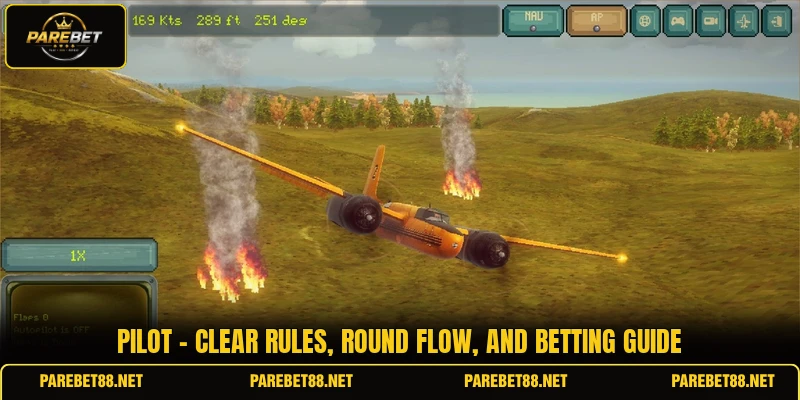
Pilot follows a simple flight format where a multiplier rises during each round, while members decide when to secure the displayed return. On PAREBET, the game uses direct controls, visible records, and quick betting windows. This article is written for members who need clear rules, useful timing methods, and a clear understanding of each round before placing PHP or USD stakes.
Pilot overview and core phase design at PAREBET
Pilot begins with a short betting period, followed by an aircraft animation and a multiplier that increases until the round ends. Players can enter a stake before takeoff, choose manual or automatic cash-out, and follow the value shown beside the flight. The result depends on whether the cash-out command is accepted before the aircraft disappears from the active display.
The interface normally shows stake fields, recent outcomes, active bets, and one clear button for confirming a return during the flight. In Pilot, the rising number represents the possible payout multiple, so a PHP 100 stake at 2.00x would show PHP 200. Members should read every screen label carefully because stake limits, maximum returns, and currency settings may vary between rooms.

Core rules and controls throughout each flight round
Every session follows a repeated sequence that includes stake entry, countdown, takeoff, multiplier movement, and the final flight result. Understanding these stages helps members use Pilot controls correctly without pressing buttons after the acceptance window has closed.
Placing a valid round stake
Players begin by choosing a stake amount within the displayed minimum and maximum limits before the countdown reaches zero. The amount may be entered manually or selected through preset buttons such as PHP 20, PHP 50, PHP 100, or equivalent USD values. A confirmed bet appears in the active list, while rejected entries remain outside the round and do not follow the aircraft.
Some layouts provide two betting panels, allowing different stake amounts or separate cash-out targets within the same flight. Each panel works independently, so members must confirm both entries before takeoff if they plan to use the dual-bet option. A late tap, unstable connection, or insufficient balance can prevent one panel from joining even when the other entry is accepted.
Reading Pilot coefficient movement
The multiplier starts near 1.00x and rises while the aircraft remains visible, with the exact ending point changing from one round to another. Players can press cash out at any accepted value, and the system calculates the return by multiplying the confirmed stake by that number. Once the flight ends, pending bets that were not cashed out receive no return for that completed round.
Recent multiplier records can help members understand how quickly earlier flights ended, but those numbers do not set the next result. Each new round should be treated as a separate event because previous high or low values cannot confirm another outcome. The useful purpose of history is interface awareness, including round speed and the time available for pressing the control.
Using manual and automated cash-out
Manual cash-out gives members direct control because the return request is sent only when they press the active button during the flight. This option suits members who watch every round closely and can respond before the aircraft leaves the display. The accepted multiplier may differ slightly from the number seen during a delayed connection because the server records the confirmed processing time.
View more: Treasure Hunt – Clear Rules And Reward Selection Guide
Automatic cash-out lets members choose a target before takeoff, such as 1.50x, 2.00x, or another supported value. When Pilot reaches that setting, the request is processed without requiring another tap, provided the bet and target were accepted correctly. Members should still check the confirmation field, since an empty or invalid target leaves the stake under manual control.

Smarter timing decisions for different round conditions
Pilot timing depends on screen speed, target selection, connection quality, and the member’s chosen return level during each flight. The following methods focus on observable controls and round structure rather than vague advice that cannot be applied on the game screen.
Setting targets before takeoff
A target should be entered before the countdown ends, giving the system enough time to confirm both the stake and automatic instruction. Members using PHP 200 at 1.60x can expect a displayed gross return of PHP 320 when the request is accepted. Clear targets also reduce rushed button presses during faster flights, especially on smaller mobile screens.
Players can compare several target levels in demo rounds or low-stake sessions before choosing the setting that matches their preferred pace. A lower value is reached more often than a distant multiplier, although no target can guarantee acceptance in every round. In Pilot, the selected number should remain visible beside the bet panel before the aircraft starts moving.
Checking connectivity and button status
A stable connection matters because every stake and cash-out instruction must reach the game server before the relevant deadline passes. Members should watch for confirmation text, color changes, or locked stake fields that show an entry has joined the active round. Pressing the same control repeatedly can create confusion when the first command is already processing.
The cash-out button normally changes its label or appearance after the request succeeds, and the settled return should enter the balance record. Members should avoid opening other heavy applications during a round if those programs slow the device or interrupt the screen. Testing one small PHP stake can confirm whether controls, records, and settlement messages are updating without delay.
Comparing single and dual bets
A single bet keeps the screen simple because members follow one stake, one target, and one settlement result during the flight. Pilot may also offer two panels, which allow separate amounts and different automatic targets within the same round. The second panel is not a backup guarantee, since both entries remain linked to the same aircraft ending point.
Players can use one panel for an earlier target and the other for manual control, provided both choices fit the displayed limits. This arrangement makes the interface busier, so each amount and target should be checked before the countdown closes. Beginners may understand the controls faster by learning one panel first, then testing dual entries with the smallest stake.

View more Category: Arcade
Conclusion
Pilot offers a direct flight round built around confirmed stakes, rising multipliers, and cash-out timing before the aircraft leaves the active screen. Members can access the game through PAREBET, review the controls, and choose PHP or USD amounts within the displayed room limits. Register an account, open the game on mobile or desktop, confirm every setting, and good luck with each flight.